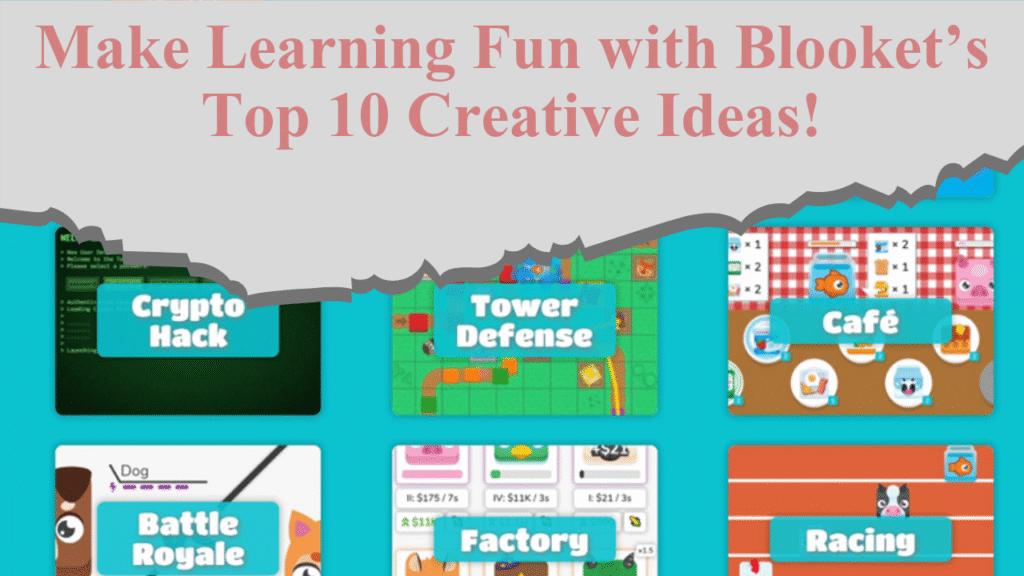
Blooket’s Solo Mode offers engaging, self-paced ways to review material without needing a live host or classmates. Among the standout options are three quick-play games that incorporate levels or progress-saving features, making them ideal for focused practice sessions. Plushie Panic delivers fast-paced matching challenges across escalating stages, Tower Defense 2 combines strategic tower building with savable progress through waves, and Cafe lets players build and upgrade a virtual business over multiple levels with auto-save functionality. These modes turn question-answering into addictive gameplay while reinforcing knowledge effectively.
Blooket continues to evolve as a leading educational platform, blending quiz-style questions with immersive game mechanics to keep learners motivated. Solo Mode stands out for students who want to practice independently, whether catching up on missed concepts, preparing for tests, or simply enjoying extra review time at home or during free periods. Unlike live games that require real-time participation, Solo Mode allows anyone with a question set to dive in alone, selecting from a variety of game styles tailored for individual play.
Many Solo games emphasize progression through levels, where difficulty ramps up gradually and players can track improvement over time. This structure helps build confidence as learners master content before advancing. Three particularly quick and effective options—Plushie Panic, Tower Defense 2, and Cafe—stand out for their level-based or save-state designs, enabling short, productive sessions that feel rewarding.
Plushie Panic: Fast-Paced Matching with Escalating Chaos
Plushie Panic serves as one of the quickest entry points into leveled Solo play. In this mode, players match correct answers to questions by strategically placing plushies on a grid, but incorrect choices trigger chaotic events like plushies bouncing around or obstacles appearing. The game unfolds across multiple levels, each introducing new question sets from the chosen topic and increasing complexity in layout and time pressure.
What makes it quick is the short duration per level—often just a few minutes—allowing students to complete several stages in a single sitting. As levels progress, the grid grows more intricate, demanding quicker recall and decision-making. This format excels for subjects requiring memorization, such as vocabulary, historical facts, or math formulas, because the matching mechanic reinforces associations rapidly.
Players earn tokens based on speed and accuracy, which can be spent on cosmetic upgrades or Blook collection outside the game. The escalating challenge keeps sessions dynamic; early levels feel approachable for warm-ups, while later ones push deeper understanding. For teachers assigning homework or students self-studying, Plushie Panic provides bite-sized bursts of practice that accumulate into substantial review without overwhelming the user.
Tower Defense 2: Strategic Defense with Full Save Progress
Tower Defense 2 ranks among the most strategic Solo options, perfect for longer but still manageable practice blocks. Players answer questions correctly to earn gold, which they use to build and upgrade towers that defend against waves of enemies. Each wave corresponds to a set of questions, and the game features multiple levels or paths with branching difficulties.
A key advantage is the full save and load functionality—progress is preserved automatically, so students can pause after a few waves and resume later without starting over. This makes it ideal for practice spread across days, such as prepping for cumulative exams. The strategic element adds depth: choosing tower placements, upgrades, and timing requires applying knowledge consistently, turning rote review into thoughtful problem-solving.
Questions appear at key moments, like between waves or when earning resources, ensuring steady content exposure. Later levels introduce tougher enemies and more complex maps, demanding mastery of the material to succeed. It’s particularly effective for science concepts, geometry problems, or cause-and-effect relationships in history, where strategy mirrors real-world application. Many users find the satisfaction of surviving higher waves highly motivating, encouraging repeated plays to refine skills and climb leaderboards for personal bests.
Cafe: Business Simulation with Auto-Saving Upgrades
Cafe offers a relaxing yet progressively challenging Solo experience centered on running a virtual coffee shop. Players answer questions to earn ingredients, serve customers, restock supplies, and upgrade equipment or menu items. The game advances through levels representing business growth—from a small stand to a bustling cafe—with auto-save ensuring no progress is lost between sessions.
Each level builds on the previous, unlocking new recipes, customer types, and upgrades that require stronger performance on questions. Quick rounds come from serving bursts of customers, allowing completion of a level in 10-15 minutes while covering dozens of questions. The simulation aspect makes it feel less like studying and more like managing a fun venture, which appeals to students who enjoy creative or entrepreneurial themes.
Upgrades create a sense of achievement: better equipment means faster service and higher earnings, tied directly to correct answers. This mode shines for language arts (reading comprehension via customer orders), economics basics, or practical math like calculating change and inventory. The auto-save feature supports flexible practice—jump in for a quick level during study breaks or build the cafe gradually over a week.
Key Benefits of These Leveled Solo Games
These three modes share traits that maximize practice efficiency:
Progression through levels keeps engagement high as difficulty increases naturally.
Save states or auto-save prevent frustration from interruptions.
Quick session potential fits busy schedules—complete one level or several without long commitments.
Token and XP rewards incentivize consistent play, unlocking new Blooks for collection.
Adaptability to any subject since all use custom or public question sets.
Students often report improved retention when gameplay feels purposeful yet entertaining. For instance, the competitive edge in surviving waves in Tower Defense 2 or expanding the Cafe empire encourages tackling harder questions repeatedly.
Tips for Maximizing Practice in These Modes
To get the most out of Plushie Panic, focus on speed in early levels to build momentum before tackling chaotic later stages. In Tower Defense 2, experiment with tower combinations to find optimal strategies for your question set’s challenges. For Cafe, prioritize upgrades that boost efficiency, like faster brewing tools, to handle busier levels smoothly.
Experiment with different question sets in each mode—science facts in Tower Defense 2 feel like defending against “enemy” misconceptions, while vocabulary in Plushie Panic sharpens quick recall. Mix them into daily routines for balanced review across subjects.
These quick, leveled Solo games transform practice into an enjoyable habit, helping learners build mastery at their own pace while enjoying the thrill of progression.
Disclaimer: This article provides general guidance on using Blooket features for educational practice. Features and availability may vary; always check the platform directly for the latest options.