Blooket.com empowers educators to host engaging live games instantly, transforming review sessions into dynamic experiences with modes like Gold Quest, Tower Defense, and newer additions such as Busy Bees and Star Grazer. With a straightforward hosting process—select a set, choose a mode, customize settings, and share a code or QR—teachers can launch games for up to 60 players on the free plan. Integrating Blooket into Project-Based Learning (PBL) enhances units by using live games as launch hooks for inquiry, checkpoint assessments for progress monitoring, and reflective rounds for synthesis, fostering deeper understanding through gamified checkpoints while maintaining real-time data insights.
Blooket continues to stand out as a leading gamified learning platform in U.S. classrooms, blending education with interactive gameplay to boost student participation and retention. As of early 2026, the site ranks among the top education platforms globally, drawing millions of monthly visits primarily from the United States and supporting millions of registered users who engage in countless games each month.
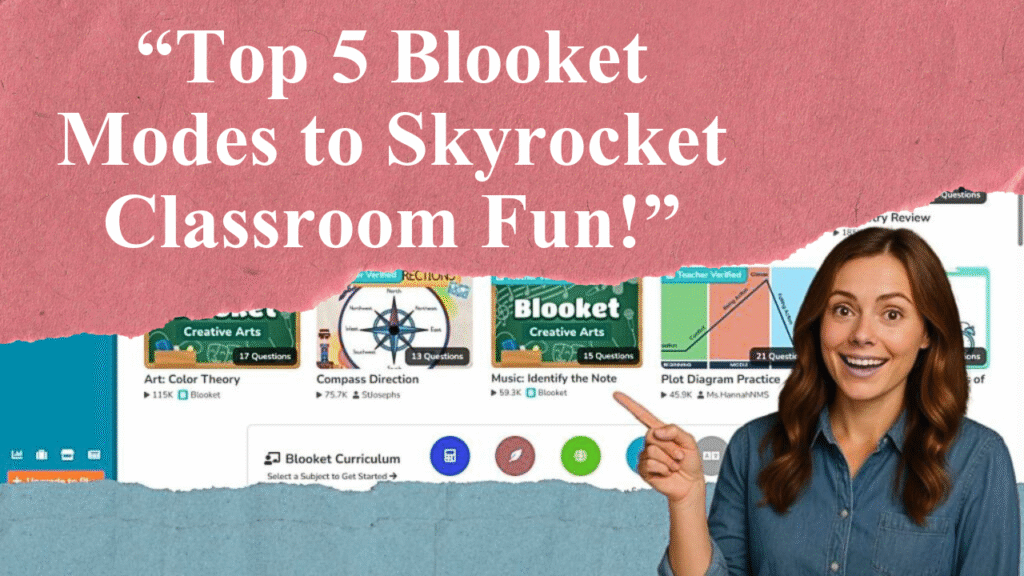
To host a live game on Blooket.com, begin by logging into your account at blooket.com or directly via the dashboard. Navigate to a question set—either from your My Sets collection, the Discover tab featuring community-created content, or a new one built in the Create section. Click on the desired set to access its preview page.
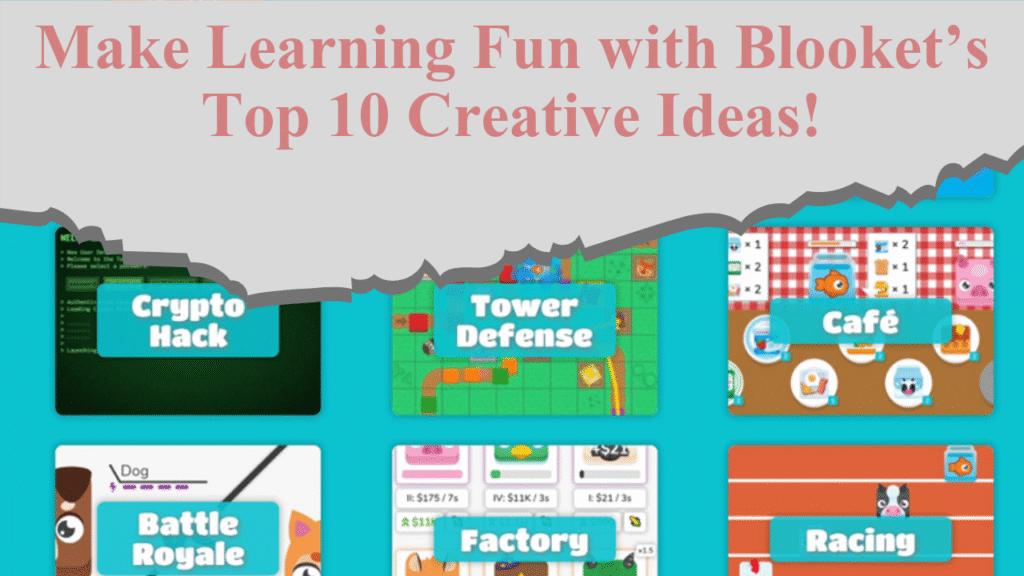
From there, select the prominent “Host” button. This opens a menu of available live game modes. Current popular options include:
Classic — straightforward question-answering competition
Gold Quest — resource collection with strategic power-ups
Tower Defense — defensive strategy tied to correct answers
Battle Royale — elimination-style clashes
Racing — speed-based challenges
Cafe — management simulation with serving accuracy
Factory — production-line efficiency
Crypto Hack — puzzle-solving elements
Fishing Frenzy — timing and precision
Blook Rush — fast-paced rushing
Monster Brawl — combat dynamics
Deceptive Dinos — trick-question twists
Newer modes rolled out in recent seasons, such as Busy Bees, Mini Mine, Star Grazer, and team-supported variations in modes like Laser Tag (for Plus users), add fresh variety for different class sizes and objectives.
After picking a mode, click “Host” to proceed to customization. Adjust settings to suit your classroom: tweak question timers for pacing, enable power-ups or upgrades, set answer limits, choose random names for anonymity if preferred, or switch to team-based play where supported (ideal for collaboration). Options often include setting a target gold amount, time duration, or player thresholds.
Once configured, hit “Host Now.” Blooket generates a unique 6-digit game code, a scannable QR code, and a direct join link. Display these prominently—project the screen, share via class chat for virtual setups, or let students scan the QR with device cameras. Participants head to play.blooket.com, input the code, select or enter a nickname, and pick a Blook avatar while waiting. No student account is required for joining live games, lowering barriers significantly.
As host, monitor the lobby in real time—view joining players, shuffle teams if using collaborative modes, and start when ready. During gameplay, observe live leaderboards, answer distributions, and student progress. Post-game reports deliver detailed analytics: accuracy rates, question-level performance, tokens earned, and overall rankings, helping identify strengths and gaps instantly.
Key Hosting Tips for Smooth Live Sessions
Test the set in solo mode first to catch any unclear questions or timing issues.
For larger classes, note the free plan caps at 60 players; upgrade to Plus for up to 300.
Use random names to encourage participation without spotlight pressure.
Enable team modes in supported games to shift from individual competition to group strategy, promoting discussion and peer support.
Keep sessions 15-30 minutes to maintain energy—shorter bursts work best for warm-ups or reviews.
Share the join link early for remote or hybrid classes to streamline entry.
Blooket shines brightest when woven into broader instructional frameworks like Project-Based Learning (PBL) , where students tackle authentic, complex problems over extended periods. PBL emphasizes driving questions, sustained inquiry, student voice, reflection, and public products—elements that pair naturally with Blooket’s interactive tools.
Integrating Blooket Seamlessly into PBL Units
Use live-hosted games at multiple PBL stages to scaffold learning without disrupting inquiry flow.
Launch Phase — Kick off a project with a themed Blooket game as a hook. For a unit on environmental science, host a Gold Quest set on climate data to spark curiosity and surface prior knowledge. The competitive fun draws students in, generating excitement for the driving question.
Inquiry and Checkpoint Assessments — Embed short live sessions as formative checks during research phases. After groups gather evidence on a historical event in a social studies PBL, host a Deceptive Dinos game to test fact accuracy amid distractors. Real-time results highlight misconceptions immediately, allowing targeted mini-lessons or resource redirects without halting momentum.
Collaboration Boost — Leverage team modes for group strategy in modes like Battle Royale or Cafe. In a math PBL designing sustainable structures, teams compete in Tower Defense using geometry questions—correct answers fortify defenses, mirroring real-world application and encouraging discussion on solutions.
Reflection and Synthesis — Close phases or the entire unit with reflective rounds. Host a Classic or Racing mode focused on metacognition questions: “What challenged you most in your research?” or “How does this connect to real-world impacts?” Auto-generated reports track growth over time, providing evidence for student portfolios or presentations.
Differentiation and Extension — Assign self-paced variants as homework for reinforcement or enrichment. Students needing extra practice revisit concepts independently, while advanced learners tackle harder sets. Combine with Blooket’s analytics to group students for differentiated PBL tasks.
Blooket Game Modes Best Suited for PBL Integration
| Game Mode | PBL Stage Fit | Key Benefit in PBL | Customization Tip |
|---|---|---|---|
| Gold Quest | Launch / Checkpoint | Builds engagement through collection goals | Set moderate timers for quick pulses |
| Tower Defense | Sustained Inquiry | Encourages strategic thinking tied to content | Enable upgrades for deeper application |
| Cafe | Collaboration / Reflection | Simulates resource management in teams | Use team mode for group roles |
| Battle Royale | Mid-Unit Review | Promotes quick recall under pressure | Limit power-ups for focus on accuracy |
| Racing | Fast Synthesis | Rewards speed and precision in reflections | Short questions for quick rounds |
| Team-Supported Modes (e.g., Laser Tag, Busy Bees) | Group Projects | Fosters teamwork and strategy discussions | Shuffle teams randomly for inclusivity |
This approach keeps PBL rigorous while infusing gamification that motivates reluctant learners and rewards persistence. Blooket’s instant feedback loop aligns with PBL’s emphasis on iteration and critique—students see immediate results, revise strategies, and improve.
Hosting on Blooket.com takes just minutes once familiar, yet delivers outsized impact on engagement and learning outcomes. Whether running quick daily reviews or embedding games within multi-week PBL units, the platform adapts to diverse teaching styles and student needs, making it a go-to tool for modern U.S. educators seeking interactive, data-rich experiences.
Disclaimer: This article provides general guidance on using Blooket features and educational strategies; always verify the latest platform options directly on the site, as tools evolve.