“Joining a Blooket game remains one of the quickest ways to dive into interactive learning, with players accessing live sessions via a simple 7-digit code, QR scan, or direct link at play.blooket.com—no account needed for basic participation, though logging in unlocks personalized Blooks and progress tracking for millions of users across U.S. classrooms.”
Blooket Join a Game: Step-by-Step Guide and Pro Tips
Blooket continues to dominate as a go-to platform for gamified education in American schools, blending quiz-style questions with competitive modes that keep students engaged from elementary through high school levels. The process to join a live game has stayed straightforward and reliable, even as the platform rolls out enhancements for smoother mobile experiences and larger group support.
To get started, the host—typically a teacher or group leader—launches a game from their dashboard after selecting or creating a question set and choosing a mode like Tower Defense, Gold Quest, or Battle Royale. This generates a unique 7-digit game code displayed prominently on the host’s screen, often alongside a QR code and a shareable join link.
Players join through one of three primary methods, all centered around the dedicated entry point at play.blooket.com.
First and most common: direct code entry. Open any modern web browser on a computer, tablet, or smartphone and navigate to play.blooket.com. You’ll see a clean interface with a prominent field labeled for the game ID or code. Type in the exact 7-digit code provided by the host—it’s case-sensitive in some setups but usually numeric. Hit enter or the join arrow, and you’re directed to the player setup screen.
Second option: QR code scanning, ideal for classrooms or quick mobile access. The host projects or shares a large QR code. Use your device’s built-in camera app (iOS or Android) to scan it—most modern phones automatically detect and open the link without extra apps. This method bypasses typing and takes you straight to the join flow, especially useful during in-person sessions where screens are visible to everyone.
Third: clicking a direct join link. Hosts can copy and distribute a unique URL (often shared via Google Classroom, email, chat, or messaging apps). Clicking it auto-loads the game session in your browser. This proves particularly handy for remote or hybrid learning environments, allowing students to join without manually entering codes.
Once connected, the next step is setting your player identity. Enter a nickname that will appear on the live leaderboard and game screen. Keep it appropriate and recognizable—many teachers encourage creative but school-friendly names like “MathMaster42” or “HistoryHero.” If the host has enabled the “Use Random Names” setting for privacy or fun, the system automatically assigns a quirky, generated nickname (think animal-food combos or silly phrases), and you can’t override it.
Important note on accounts: Joining a live game requires no Blooket account at all for guest play. You can participate fully, answer questions, earn points in the session, and compete on the leaderboard without signing in. However, for persistent benefits like saving your earned tokens, unlocking and customizing Blooks (the collectible characters that serve as avatars), tracking long-term stats, or using your own saved sets, log in before joining. Use your existing credentials via Google, email, or the Blooket ID system. Logging in also lets you carry over progress across multiple games.
After nickname selection, you enter the lobby. Here, wait for the host to start the game— you’ll see a countdown or live player count updating in real time as more classmates join. The lobby often displays fun animations or previews of the chosen game mode. Common modes include:
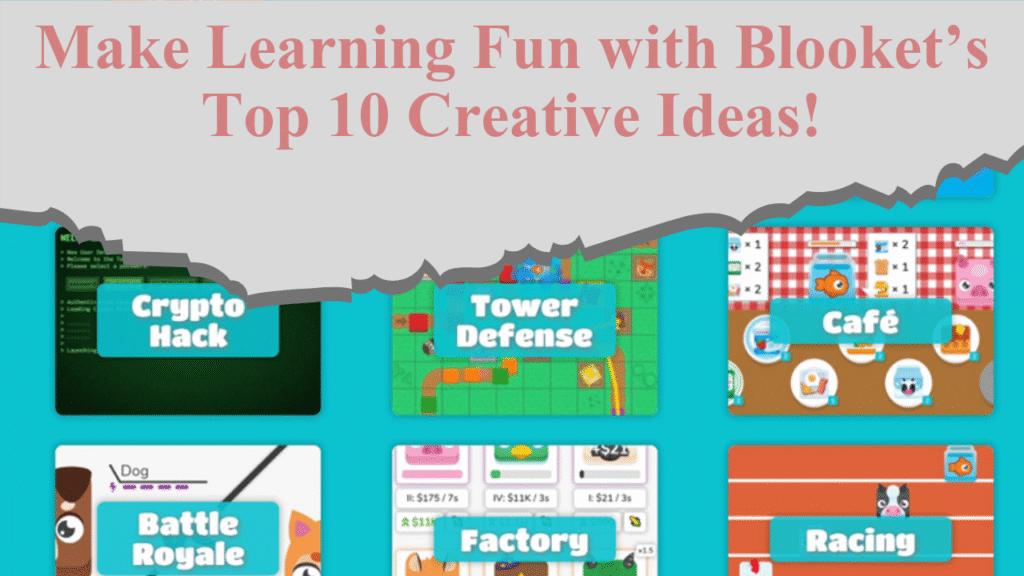
Tower Defense — Strategy-based defense with question accuracy powering towers.
Gold Quest — Adventure-style collection of gold through correct answers.
Cafe — Restaurant management sim where questions fuel orders.
Battle Royale — Elimination-style competition with power-ups.
Factory — Resource-building mode emphasizing speed and accuracy.
Pro tips for smooth joining and optimal play:
Ensure a stable internet connection—Blooket performs best on Wi-Fi rather than spotty mobile data, especially in larger classes.
Use a device with a reliable keyboard for faster answering if on mobile (though touch works fine).
Double-check the code entry—typos are the number one reason for “invalid code” errors.
For privacy-conscious settings, note that nicknames are visible to all players in the game, but no personal data is shared.
In virtual setups, join early to test audio/visuals if the host uses screen sharing.
Mobile browsers handle joining flawlessly in 2026, with full support for landscape mode and touch inputs.
Troubleshooting common issues:
If the code doesn’t work, confirm it’s active (hosts sometimes regenerate codes) and that the game hasn’t ended. Refresh the page or try another browser if loading stalls. For QR issues, ensure camera permissions are granted. If joining via link fails, copy-paste it directly rather than clicking from certain apps that may block redirects.
Blooket supports up to hundreds of players in a single session depending on the plan, making it scalable for big lectures or small study groups alike. The platform’s no-download requirement keeps barriers low—everything runs in-browser.
Whether you’re a student jumping into a quick review session or a teacher observing from the host side, the join process embodies Blooket’s core philosophy: instant access to engaging, educational competition. Master these steps, and you’ll be battling for the top spot in no time.